< Back to A Level Cheat Sheets
OCR A Level Geography - Earth’s Life Support Systems Cheat Sheet
⚠ Please note, this is a work-in-progress, somewhat unfinished revision guide. The most unfinished sections are marked with [tbd] and there may be general issues and typos. ⚠
Latest update: 12/05/2025 19:55.
Last content addition: 07/06/2024 22:18.
✅ Note: This file is synced with this repository. This is the latest version.
Use a PC/device with a large screen to see the Table of Contents on the left-hand side to quickly navigate through this document.
Discuss with other students, developers, educators and professionals in the Baguette Brigade Discord server! You can also receive a notification when there are new Cheat Sheets, Summary Sheets (new!) or other revision material is made public there!
For the Cheat Sheet matched to the entire specification, you can go here.
Earth’s Life Support Systems
“Without water and carbon I literally would not be here” - a wise man, 2024
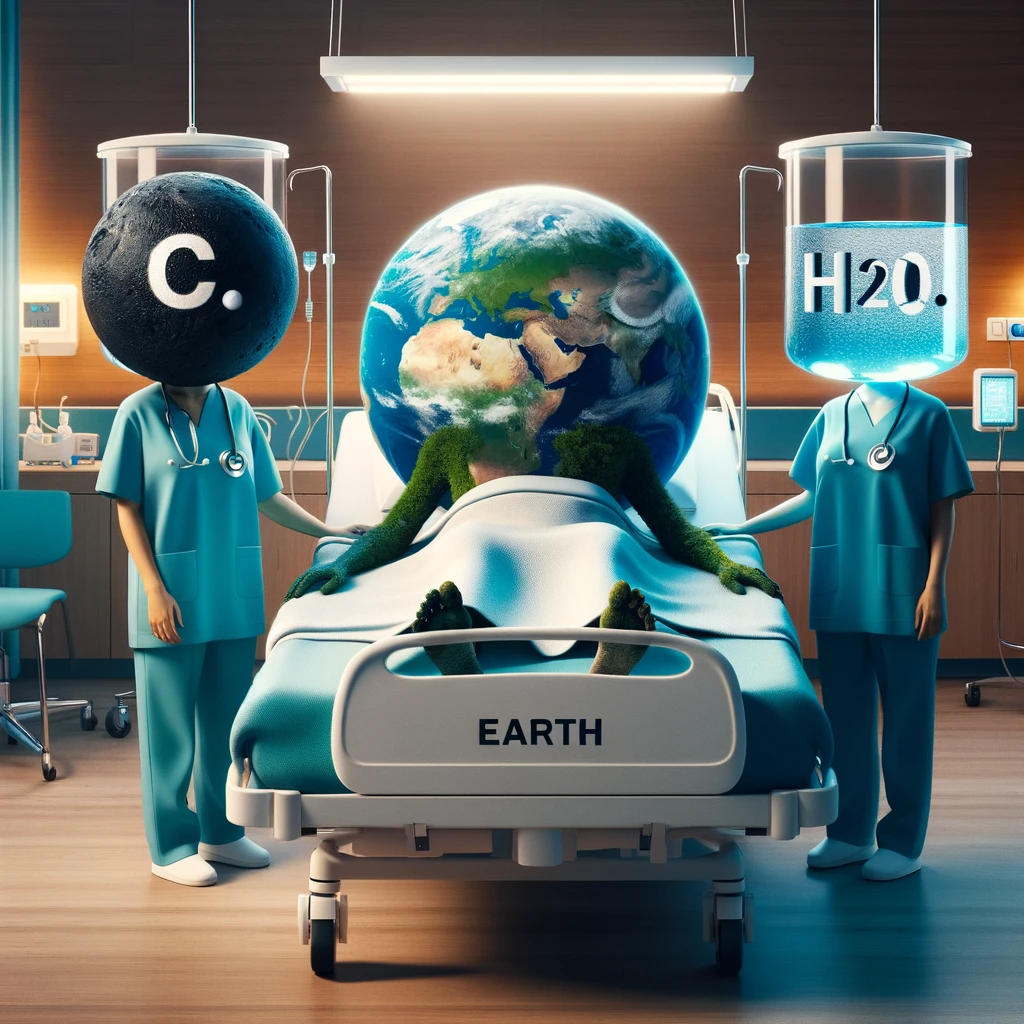
giving earth life support - created with dall-e 3
1. How important are water and carbon to life on Earth?
The short answer to this is that the water and carbon cycles are very important.
The long answer? Well…:
Introduction to water
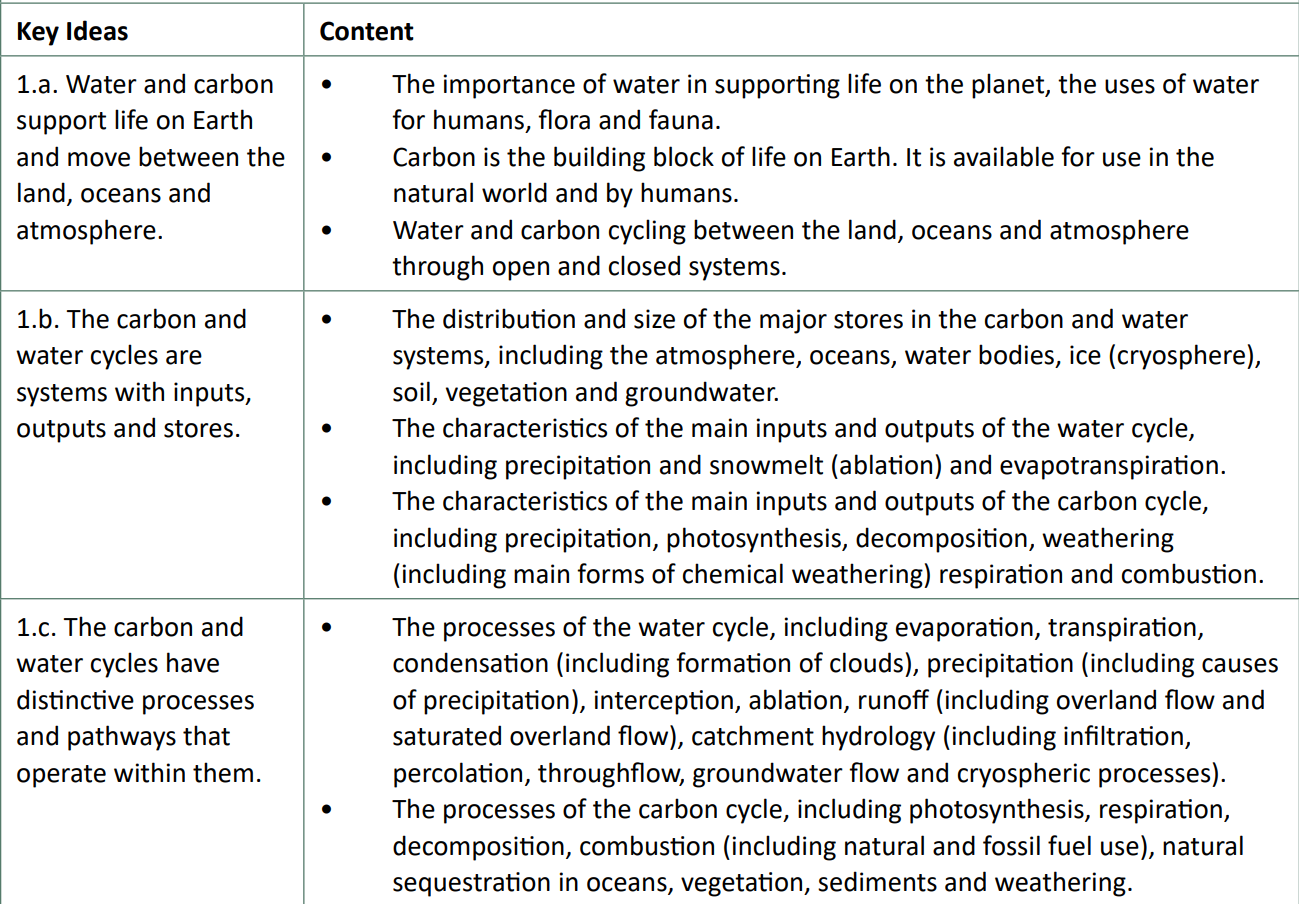
1a. Water and carbon support life on Earth and move between the land, oceans and atmosphere.
Water is a fundamental prerequisite for life, not just on Earth but it is considered by scientists as an essential necessity for any sort of life in the universe.
The Circumstellar Habitable Zone, or Goldilocks zone, is the habitable area around a star that is neither too close nor too far so that conditions for life are too hot or too cold, and categorised by allowing liquid water to be present. Otherwise, the water would be evaporated or be as solid ice. As such, liquid water allows life to form. Depending on the star, this zone can be further or closer to it, or the zone itself being wider or smaller.
It is described by astronomers as:
“The area around a stellar object which contains liquid water, making it habitable. The regulation of temperature and radiation facilitate respiration and photosynthesis”.
Water is essential to supporting life. The atmosphere is sustained by a continual cycle of evaporation and condensation through cloud formation. Water vapour itself is a very potent greenhouse gas, which regulates and moderates global temperatures: the climate is 15 degrees C warmer with water than without. As sun rays collide with the molecules in water vapour, they heat them up, causing them to vibrate and let off heat. In addition, water vapour is excellent as stopping short-wave radiation from causing harm for the biosphere. The greenhouse effect by water vapour prevents some long-wave radiation reflected from the Earth from exiting. It makes up 65-95% of all the biospheric mass, including in people, flora and fauna.
Water itself is in a closed system, meaning that water cannot enter or leave the Earth. As the water cannot exit or enter, it is transferred, stored and moved around inside the system. This is known as the global hydrological cycle. An open system within the overall closed water cycle system may be a drainage basin: water can enter and exit at any time.
| Store | Size | % of total |
|---|---|---|
| Ocean | 1.33b km3 | 96.5% |
| Cryosphere | 24m km3 | 1.76% |
| Aquifers | 23m km3 | 1.69% |
| Lakes | 176k km3 | 0.013% |
| Pedosphere | 17k km3 | 0.0012% |
| Atmosphere | 13k km3 | 0.00093% |
| Rivers | 2.1k km3 | 0.00015% |
| Biosphere | 1.1k km3 | 0.000081% |
* Data updated to match latest scientific research.
Introduction to carbon

Carbon is the building block of life on Earth. It is available for use in the natural world and by humans.
It is found across the planet, in a wide variety of stores, and is measured in petagrams of carbon - PgC - which is the same 1 gigaton. It is stored as a gas in the atmosphere, in oceanic sediments, and is used in living organisms to… continue living, amongst other things. Carbon is also very useful as we can use it to power various electricity generators through hydrocarbons like oil.
Similarly to water, carbon is a closed system on Earth, but on a more local scale such as a rainforest it becomes an open system.
| Store | Amount | Format |
|---|---|---|
| Lithosphere | 100,000+ PgC | Fossil fuels, sedimentary rocks |
| Hydrosphere (deep) | 40,000 PgC | Mostly CaCO3 from dead shelled organisms and bicarbonate ions. |
| Pedosphere | 2,000 PgC | Litter from dead or decaying matter and near-surface soils |
| Cryosphere | 1,700 PgC | Permafrost |
| Hydrosphere (upper) | 1,000 PgC | Dissolved CO2 from atmospheric dissolution |
| Biosphere | 650 PgC | Living organisms, flora and fauna. |
| Atmosphere | 800 PgC | Carbon dioxide |
The data is somewhat variable and differs between scientific research.
Inputs, outputs and processes of water
1b. The carbon and water cycles are systems with inputs, outputs and stores.
1c. The carbon and water cycles have distinctive processes and pathways that operate within them.
In the global hydrological cycle, there are many interrelated processes, stores, inputs and outputs, similar to that of a glaciated system. Flux is a term used to measure the rate of flow between stores, through mass over unit time (e.g. 3m/s). In total, around 505,000km2 of water is moved annually around this system.
Evapotranspiration
Evapotranspiration is the term used to denote the transfer of water into the atmosphere, combining evaporation and transpiration. Energy, such as insolation, when added to a mass of water like an ocean, increases particles’ energy and breaks the bonds between them, allowing for a state change to gas as water vapour, which then rises. This is evaporation. Transpiration on the other hand occurs only from the biosphere and mainly plants - this accompanies the process of respiration and photosynthesis. Leaves and plant surfaces lose water through their stomata via evaporation, and this water is replenished through effectively pulling more water and nutrients from the roots through the plant. On a local scale this may be insignificant but on a wider, perhaps national scale such as the Amazon Rainforest, the amount of water transpired through the plant, and evaporated by rivers and other stores, contribute significantly to changing global weather patterns. In total, transpiration accounts for around 10% of atmospheric water vapour.
Water in the soil (pedosphere) is the most likely to be absorbed by trees and vegetation, which transpire and release water into the atmosphere. You can use this as an example of a rapid flux, from the pedosphere, to the biosphere and then into the atmosphere, perhaps in under a day. An oak tree can transpire over 150,000 litres of water per year. In total 10% of water vapour present is transpired by plants (biosphere)!1
Precipitation
One of the main processes in the water cycle is precipitation. Simply put, this is when water leaves the atmosphere through any form, such as rain, snow, sleet or hail. When water vapour reaches the critical dew point (temperature at which air becomes saturated with moisture), it condenses in the atmosphere as clouds. Provided that there exists condensation nuclei, then clouds will form. As these nuclei of ice crystals or water droplets aggregate, they become too heavy to be suspended in the atmosphere, thus reaching a critical size and then fall to the surface as precipitation. This process is known as the collision-coalescence theory.
Water produced by precipitation is then collected in a drainage basin and moves into rivers through runoff - a combination of processes including overland flow, in addition to soil infiltration, ground percolation and subsequent throughflow and groundwater flow. Most of this water will then enter the ocean again, ready for the cycle to repeat, or percolate further into permeable rocks and be part of an underground aquifer.
Some key points:
- Where precipitation occurs at high altitudes or in cold environments, snow is likely to form, and potentially remain on the ground for a long time, increasing the lag time visible on flood hydrographs.
- Duration is the length of time a period of precipitation lasts. Climatic depressions or frontal weather systems may cause this; there may also be high rates of overland flow with flooding for long durations.
- Intensity is how much precipitation falls over a given time period. This can also have an impact on reducing lag times with high intensity, causing more overland flow due to less time to infiltrate into the soil. The amount the soil can absorb is the infiltration capacity.
- Precipitation may also vary seasonally, with greater intensity in certain months. This variation can increase or decrease the amount of water in rivers and lakes.
Precipitation may make it to the ground in a catchment area and be subject to the processes involved in catchment hydrology. Or, it may be intercepted by trees and vegetation,
Ablation
Ablation, which you might know from the Glaciated Landscapes unit, is the result of snowmelt. Glaciated environments and ice sheets contain the second highest amount of stored water on the planet - behind that of oceans - at 29 million cubic kilometres. Although most is in polar glaciers which take a longer time to melt due to the much colder temperatures, water is still released through meltwater, calving and sublimation. And from retreating alpine glaciers.
In addition, permafrost melting can also contribute to the creation of extra ponds and lakes, visible in thermokarst landscapes in the Arctic Tundra. This change occurs seasonally.
This video is a great example of the risks to humans when there is too much ablation. [VIDEO]
Condensation & cloud formation
There are some fundamental principles of cloud formation you need to know:
- HOT AIR CAN HOLD MORE MOISTURE THAN COLD AIR. (Greater energy allows for more gases)
- As air rises, it always cools, at a rate of 0.65 degrees C per 100m or so.
- Due to gravity, there are fewer molecules of air above the original air pocket. Therefore the pressure is lower, and the air pocket expands. With this expansion there is greater room for the molecules to collide, reducing kinetic energy. A reduction in energy lowers temperatures.
- Air rises when it moves over a mountainous region, or wind from below moves over a mountain.
- The atmosphere has less pressure with altitude. Therefore, the same amount of air in a ‘parcel’ will occupy a greater area at higher altitudes.
- The dew point is the critical temperature at which air can contain purely water vapour at a given pressure. Beyond this point, cooling results in condensation as no more moisture can be held as vapour.
Air moves in ‘parcels’ which have their own temperatures, humidity, etc.
Adiabatic expansion
When air cools or expands adiabatically, this means that there is no heat exchange with the environment. The parcel of air purely changes based on the pressure being exerted on it by the atmosphere.
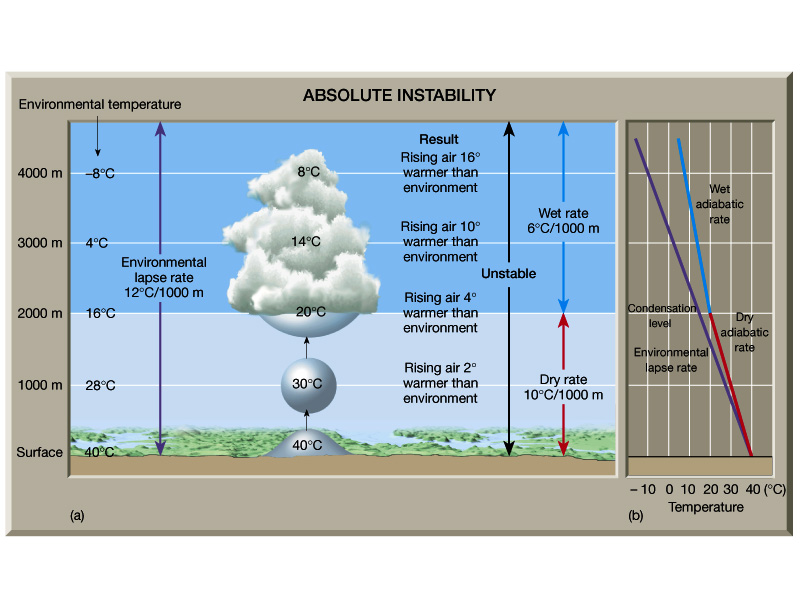
- The environmental lapse rate (ELR) is the decrease in air temperature with altitude for a specific time and place. this is 6.5 degrees C per km on average
- The dry adiabatic lapse rate (DALR) is the rate at which unsaturated air cools during ascent, or warms during descent. The DALR is 10 degrees C per km.
- The saturated adiabatic lapse rate (SALR) is the rate at which air at its dew point (and therefore condensing) cools as it rises. Condensation releases latent heat, making this lower than the DALR at around 7 degrees C per km.
These are significant as the determine how “stable” the atmosphere is.
When the sun warms an area of land, it creates heat, which warms up the air around it. As this air is unsaturated, it will decrease in temperature at the DALR. As it continues to increase in altitude, the temperature reaches the dew point, and the air becomes saturated.1
Cloud formation
Clouds main form through convection. As an area of ground warms, the local air “parcel” rises - this is atmospheric instability. For this example, let’s say that the dew point is 10degrees C lower than the temperature at the surface (as a result of insolation). Therefore, as the air has not reached its dew point, it moves upwards at the DALR, and reach the dew point at an altitude of 1km. Once it reaches this level, condensation will occur, forming a cloud. However, there is still convection occurring, as the air parcel is still warmer than the surrounding ELR. Eventually, the ELR and SALR will be in equilibrium at a given altitude, which marks the point of atmospheric stability and halt of cloud formation
Different areas at different times have different dew points. and rates of ELR
This may be hard to visualise as we cannot see individual clouds and water rising and falling. I like to resolve this by remembering that it’s not one cloud that forms: it’s a whole cloud system that can span 1000s of kilometres; the sun can cause this convection after heating whole continental areas of land.
If the dry environmental lapse rate is lower than the ELR, the air parcel that would typically rise is unable to do so as it is cooler than the surroundings and can only rise through force (e.g. topographic changes) as the atmospheric conditions here are stable.
Ways clouds form
Air can be cooled, aside from just moving vertically upwards, in several ways, and they create different types of clouds.
- Hot air rises through convection, cooling through adiabatic expansion, in areas of atmospheric instability. This forms large, puffy cumulus and cumulonimbus clouds - rain and thunderstorms common.
- Air can move laterally over a cooler area, as advection. This includes nimbostratus clouds. (Remember, as they move into a cooler area, condensation is more likely, with higher dew points)
- Air can be forced through wind over an area of high topography (mountains) through orographic lift, cooling more rapidly and thus reaching the dew point more quickly, forming clouds on the windward side of the mountain. This creates orographic rainfall on one side and a rain shadow on the other.
- When a warmer air mass mixes with a cooler one, the cooler one is heavier and will slide below the warm one. This is frontal lift. The hot air above is lifted by the cool air below, rapidly cooling it and, if this is enough to reach the dew point, the air becomes saturated and clouds form!
Catchment hydrology
There are a range of processes in a drainage basin that affect the water cycle.
When precipitation occurs in an area above freezing point, is is able to move rapidly as water as opposed to slowly as snow. When this water lands on soil, it has a few options, ultimately with the goal of moving into rivers through runoff - a combination of processes, as defined below:
Overland flow is the term used for the flow of water over the ground. It is the same as surface runoff. When on the surface, water may infiltrate into the soil - provided that the ground is not saturated. If the ground is saturated, typically defined by the water table being at the surface, then the water running off on the surface is known as saturated overland flow.
When this water has infiltrated into the soil, it can move through it laterally through throughflow. Gravity still acts on it, and therefore it may percolate into permeable ground rocks, or aquifers. Water in these rocks are stored as groundwater, and move through groundwater flow. It may then move into a store such as ocean or lake, where it remains for long periods of time. Eventually, evaporation moves it into the atmospheric store.
Inputs, outputs and processes of carbon
Precipitation
I’m not sure why the specification specifically states this, as this is mostly to do with the water cycle. However, rainwater and other forms of precipitation can combine with gaseous carbon (CO2) to form carbonic acid, which is able to break down some sedimentary rocks in situ, such as limestone. In addition, in oceans, calcium carbonate is a store of carbon in plankton and shelled organisms, and this may precipitate when the organisms die and lithify on the ocean floor. However, as carbon is acidic, too much of this can disturb marine life.
Photosynthesis
Photosynthesis is the process that transfers atmospheric carbon dioxide into the biosphere, accounting for 120 PgC per year. Plant stomata open and close and allow carbon to enter, combine with water, to create energy (glucose) for the plant, allowing it to grow and increase its transfer of carbon further. The respiration flux accounts for 118 PgC to be transferred back into the atmosphere from the biosphere store too. This is an example of the fast carbon cycle.
Decomposition
Decomposers such as fungi and microbes break down dead organic matter, and in the process releasing most of the stored carbon into the atmosphere as carbon dioxide, and some into the soil too. This process occurs very quickly in environments where there is a lot of energy usually given by heat along the equator in tropical rainforests and is slower in much colder locations like the tundra.
Weathering
Weathering includes physical, chemical and biological components, and refers to the in-situ breakdown of rock.
Physical weathering is the action of other factors such as water or biotic life mechanically breaking down rocks, for example roots cracking open rocks or freeze-thaw action.
Chemical weathering can also be significant, such as carbonation, which occurs when carbonic acid is produced (see above) which breaks down carbonates in rock strata, which then releases CO2 gas or dissolved in water streams. This contributes to how phytoplankton and other cretaceous aquatic organisms obtain their carbon - and accounts for 300 million tonnes annually.
A combination of physical weathering, which increases the surface area susceptible to chemical weathering, and chemical weathering itself
Combustion
Combustion is simply the process of burning organic material with oxygen, releasing carbon and other gases.
The biggest example of this (10 GtC/yr) is human activities, from fossil fuels for power stations. This moves carbon from the lithosphere to the atmosphere.
In natural environments too this is essential lightning creating fires, removing forest floor litter and allowing new growth when spaces of the forest canopy are opened. This moves carbon from the biosphere, and sometimes soils and peat too, to the atmosphere.
Volcanism (Hazards)
Not part of the Paper 1, but a synoptic link can be made to volcanoes and how they release carbon for Paper 3, Hazardous Earth. As tectonic activity moves carbon that has been lithified on the ocean floor as sediment into the Earth’s crust and mantle, where the matter is heated and turned into a gas. At a convergent boundary, the gases bubble up and release the stored carbon from the lithosphere into the atmosphere. This is extremely slow, known as the deep water cycle, over millions of years, but when it does occur, can be significant. This accounts for around 300 m tonnes per year (40x less than anthropomorphic emissions). Source
Oceanic sequestration
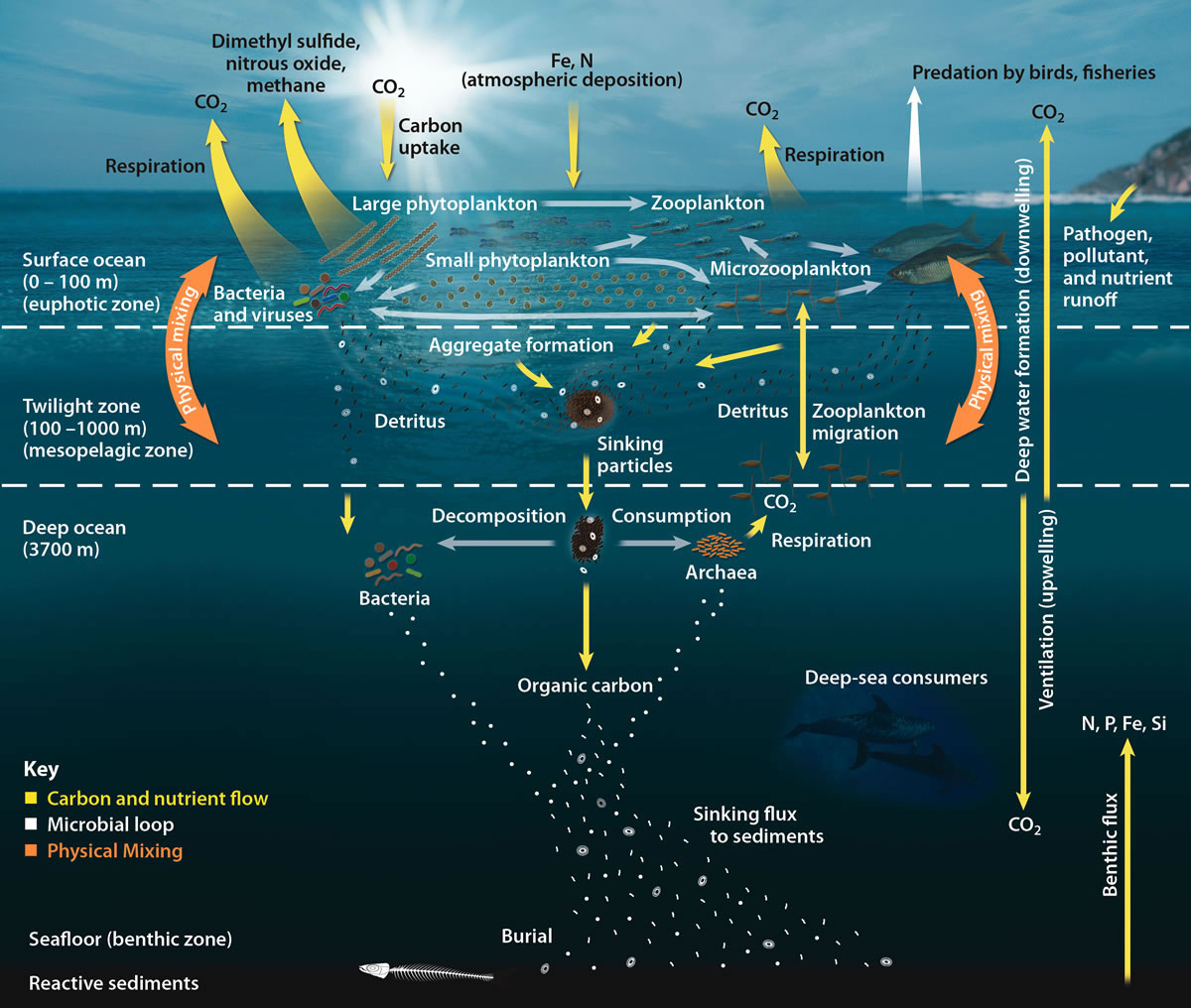
Oceans absorb large amounts of atmospheric CO2 through diffusion - there is a concentration gradient between the water and air. Currents move this carbon and the water too. In cool climates, water becomes denser, and it sinks - bringing the dissolved carbon within it too. This is an example of downwelling. As this is a cycle, upwelling may occur many thousands of years later in warmer climates.
In addition to this, phytoplankton and other marine life take in carbon from the atmosphere. This accounts for half of all photosynthesis worldwide, at over 50 GtC/yr! Phytoplankton are the basis for the marine food chain, with the locked carbon either falling into sediment on the ocean floor, or being eaten by other organisms like shelly crustaceans that then decompose (releasing CO2 gas) or, again, falling and eventually lithifying into sedimentary rock, being part of the long-term carbon cycle.
Vegetation
Vegetation, or the biosphere, takes in huge amounts of carbon and sequesters it for long periods of time. Rainforests, boreal forests and mangroves photosynthesise large quantities of carbon from the atmosphere. In general, for the first 100 years of a tree’s life, it is a carbon sink, and even after this period ends, the carbon sequestered is visible in its huge trunk and biomass store, potentially several tonnes of it. Some vegetation can store carbon for centuries.
Sediments
Sedimentary rocks include limestone, shale and sandstone. As sediment, from organic matter, builds up over time, the sediment at the base of an accumulation may be compressed and turned into rock, a process known as lithification. This process notably occurs at the ocean floor and accounts for 0.2GtC/yr from the hydrosphere -> lithosphere.
Case study: the Amazon Rainforest
2a. It is possible to identify the physical and human factors that affect the water and carbon cycles in a tropical rainforest.
You may have done this at GCSE - might be good looking back for a more general understanding!
Topical rainforests are almost exclusively located between the two tropics, at 23.5degN and S from the equator. They are categorised by:
- having high average temperatures (around 27degC)
- little variation in temperatures seasonally
- very high annual precipitation (>2000mm). Although the precipitation can vary seasonally, with Manaus recording 6x more rainfall in winter/spring compared to summer, there is no dry season.
- Net primary productivity (the net gain of carbon stored in an ecosystem) is about 2,500g/m3/yr.
Undisturbed tropical rainforests absorb over 30 tonnes of C/ha/yr, and respire 24.5t C/ha/yr. The amount of total carbon stored in all rainforests is around 100 GtC, with 1-3GtC annually absorbed from the atmosphere.
- There are ~390 billion trees in the Amazon. (around the same number of stars in our Milky Way galaxy)
70% of the Amazon is located in Brazil.
Physical factors affecting water
Water has many stores and flows in the rainforest. Water is affected by a variety of physical factors including:
- temperatures
- rock permeability and porosity
- relief
High temperatures allow the atmosphere to have high absolute and relative humidity, with a higher dew point. This allows large, cumulonimbus clouds to form with convectional rainfall from the heat, all year round. Diurnal changes in temperatures mean that precipitation occurs typically in the afternoons.
In addition, these high temperatures and the geographical location (between the tropics) mean that transpiration losses are high, but also the inputs into the plants are high, stimulating great plant growth, which in turn increase water uptake and evapotranspiration. Overall, 1/2 to 3/4 all precipitation is recycled (evaporated without any runoff), demonstrating strong interdependence between the land, biosphere and atmosphere with evapotranspiration and precipitation.
This is an example of a positive feedback loop: greater vegetation, greater evapotranspiration, greater precipitation, greater vegetation… etc.
Rock permeability in the Amazon is also a physical factor. The Amazon Basin is surrounded to the north and south by the Guiana and Brazil Shields, sections of ancient crystalline rock with high amounts of jointing, with the central Amazon River lying in between, in an area of weakness. This means that runoff rates are much higher for large portions of the Amazon, due to there being little potential to store and slow water movement during intense precipitation events, with short lag times. In the west, outcrops of limestone and other porous rocks can help to store water and reduce overland flows. In the long-term, huge water stores have built up in the underground aquifers and the soil, with a shallow water table of under 5m.
Relief also plays a role. The gentle relief of the basin today results in most flows being horizontal, either overland or throughflow in the soil. However, the Andes to the west increases the relief significantly. Higher relief adds energy to water and thus there is less chance for infiltration to occur. Surface runoff is much higher and, combined with orographic lift likely occurring here, there is the potential for low-lying flood plains downstream to fill for several months. Therefore, relief can both increase and decrease levels of overland flows, whilst altering the stores of water in the soil or over the land.
Physical factors affecting carbon
Carbon stores and flows are influenced by temperature, vegetation, organic matter in the soil, and rocks’ mineral composition.
Biomass, unexpectedly, is the greatest carbon store, with 100 billion tonnes of it. The temperature sustains strong rates of photosynthesis, which creates more plant matter and a positive feedback loop ensues, with NPP at 2500g/m3/yr. The amount of organic matter in the soil accounts for 40% of the rainforest’s total carbon store, showing there is significant storage and sequestration in the roots of trees. The growth is facilitated by high temperatures, which is strongly dependent on the interrelationship with the water cycle.
The high temperatures and demand for nutrients also make the store of carbon in and on soil very low, due to the very fast decomposition of dead matter by decomposers. Organic carbon thus circulates very rapidly.
The mineral composition of rocks, is largely igneous and metamorphic, with granite being abundant. These are not carboniferous but store large amounts of carbon in the long-term.
Spatial scales
An individual tree may have little influence on the cycle of water and carbon. Trees are the main factor in reducing the velocity of precipitation, shielding the soil and preventing runoff of nutrients. At the same time, detritivores and decomposers are sheltered from the sun under tree cover, allowing for rapid decomposition of nutrients and release of carbon on the forest floor. A single tree sequesters over 22kg of carbon every year from the atmosphere through photosynthesis fixation through the stomata of each leaf, permanently (well, until combustion or deforestation occurs).
An individual tree can take up around 50,000 litres of water every year from the soil. This is fuelled by uptake from the soil and groundwater stores, naturally reducing the amount of water there and adding it to the feedback loop of evapotranspiration and precipitation. They also play a part in intercepting precipitation, evapotranspiration and stabilising the soils through their roots, which are a large subterranean carbon store too.
The rainforest as a whole may create flying rivers due to the sheer amount of water being pumped by transpiration and the temperatures facilitating evapotranspiration. Huge amounts of water is transpired - 20 billion tonnes per day by the 390 billion trees acting as pumps from the soil to the atmosphere, so much so that there is more water in these flying rivers than there is in the Amazon River itself.
The Amazon rainforest stores over 100 billion tonnes of carbon and absorbs 2.4 billion tonnes annually, with 1.7 billion tonnes released through decomposition and respiration. This has a global scale impact, with it accounting for 1/4 of all terrestrial carbon absorption. Small changes in the carbon cycle thus have wide-ranging consequences.
Madeira drainage basin
This basin is located in the southeast of Amazonia and in Brazil, Peru and Bolivia. It accounts for about 20% of the Amazon’s area and is the largest tributary river. Deforestation has occurred in the higher elevation catchment areas, reducing the immediate storage of carbon and water in the biosphere and eroded soils. The outcrops of permeable rocks in this area, due to the velocity of water increasing and therefore less time for absorption, decreased in their water storage.
Downstream, flooding in 2014 caused the inundation of floodplains, and water levels at Porto Velho reached record levels at 19.68m above normal. There were 60 deaths, 68,000 evacuations and the longer-lasting effects of water-borne disease outbreaks including cholera. Unexpectedly high rainfall (exacerbated by orographic lift) combined with the reduction of interception, decreased lag times and increased the peak flow. Overland flows increased substantially, with water unable to infiltrate into the soil as much and percolate into aquifers, it was understandable that the overland flow in Porto Velho was too much, and the ground was full saturated by this point.
Impact of human activity
As already demonstrated, there is high interdependence between the land, biosphere and atmosphere. If just one of these are disturbed, there is a consequence on all the other aspects. According to REDD, between 10 and 20 per cent of global GHG emissions are caused by forest destruction and damage, which equates to more than the entire global transport sector!
70% of deforestation in the area is cattle ranching. In total, deforestation peaked at 20k km2/yr in around 2005.
The effects of deforestation are wide-ranging. Converting trees into pasture increases runoff by 27x. Rainforests also have significantly greater humidity and convectional rainfall versus pastures, decreasing the likelihood of cloud formation downwind from them. This can cause droughts and greater aridity at a national or global scale - studies have found that this moisture cycle regulates rainfall patterns in the western United States. Deforestation in one area makes other forests unexposed also more likely to be at risk through environmental degradation, potentially causing a snowballing effect of damages to not only the ecosystem but the carbon and water cycles at large.
On the carbon cycle, human activity shrinks the carbon stored in biomass by between 90 and 99% with grass or croplands versus the rainforest, from hundreds of tonnes per hectare to just two tonnes. Soils are depleted with less decomposer activity, and have nutrients, being washed away quickly with the precipitation not being slowed by throughfall or stem flow.
Deforestation also causes a degrading effect on other areas of land beyond the immediately deforested area. 38% of remaining Amazon forest already degraded - an area 10x the size of the UK and amounting to over 1 million km2; these areas exhibit similar (but somewhat less severe) characteristics to deforested regions.
All of these combined have resulted in severe droughts downstream for population centres in Rio and Sao Paulo. The lack of water in reservoirs and extreme heatwaves due to the South American climatic system no longer being in equilibrium as a result of human activity is stressing aquifers and groundwater stores further, which is unsustainable.
Management strategies
Several management strategies that preserve and have positive effects on the water and carbon cycles are in use today.
Legislature
Almost half of the Amazon today is classified as a natural park or conservation areas. Here, deforestation and farming is banned. Legislation prioritises large swathes of primary forest and ensures it does not become commercialised.
Legislation can also be legally binding, with severe consequences for those who are guilty of deforestation or entering these areas. However, continual investment in policing is required for it to be effective in the long-term.
Afforestation & Reforestation
Schemes such as REDD+ involve large TNCs exchanging carbon credits. The Surui people received payment from Natura which was used to finance the planting of trees in deforested and degraded areas.
NGOs also have a large role to play. The Parica project is in the 4th most deforested state of the Amazon, and is planting 20 million trees over 100,000 hectares of land. Although a monoculture this still plays a role in carbon sequestration and reduces surface runoff, allowing the degraded land to be restored and contribute to the rapid cycling of water and carbon again.
The UK’s FSC has sponsored projects across Amazonia and works with companies to support sustainable forestry. In 2020, this accounted for 220,000 hectares and has also accounted for over 350,000 tonnes of CO2 sequestered annually.
Improved agricultural techniques
Deforestation for cattle ranching and growing crops such as soya is unsustainable. The soil is not very fertile - nitrogen, potassium and phosphorous are absorbed quickly by the large rainforest trees. After deforestation this is considerably reduced - rates seldom reach 100 cows per square km (that’s 1 million square metres). This encourages practices like “slash and burn” when areas of rainforest are just cleared and moved on to the next areas when the soil is no longer profitable, after only a few years.
Crop rotation and the integration of animals alongside crops may help increase fertility. Animals excrete the necessary substances for plant growth, which allows for 5x increase in land potential in already deforested areas.
“Dark soils” are also being scientifically engineered that can support high densities of permanent arable and animal farming. This may eliminate the need for deforestation into new areas, and return the water and carbon cycles to their former equilibrium glory if successfully created.
Case study: the Arctic Tundra
2b. It is possible to identify the physical and human factors that affect the water and carbon cycles in an Arctic tundra area.
The Arctic Tundra is located between 60 and 75 degrees N and includes parts of Russia, Canada, Norway, Iceland and Alaska, among others. It occupies a combines 8m km2 and is defined by having a July isotherm of 10 degrees C. This means that t warmest month reaches a maximum temperature of 10 degrees (this is roughly equivalent to the tree line). The Arctic Circle is the southernmost point where the sun can remain below the horizon for 24 hours during certain seasons.
The tundra is in a negative heat balance for 8-9 months of the year, releasing more heat than it takes in. This is a combination of polar cells in the atmosphere, and the Earth’s tilt meaning that areas remain below the horizon, thus being in complete darkness for 2 months of the year. During these times, temperatures may reach -40degC. The inverse is true in the summer, where the long daylight hours somewhat compensate for the short growing season.
Physical factors of water
The mean annual temperature is -15C, with precipitation between 50 and 350mm, with a mean of around 100mm annually - of which most is snow.
The little energy due to poor insolation for most of the year means that there is low absolute humidity. The freezing conditions mean there is low ground and soil moisture, with little rates of evaporation. As a result, there is limited groundwater and soil moisture stores, with permafrost below stopping percolation and subsequent groundwater flow.
Seasonal changes in summer occur, with a few months of a positive heat balance. Insolation melts the snow on the surface and the active layer thaws, creating surficial stores with lakes and ponds, whilst permafrost stops any further infiltration. Evaporation is somewhat heightened here too, but still extremely slow. Overland flow in rivers may be high, with the Yukon river reaching 24,600 cumecs in summer compared to 340 cumecs in the winter.
Rocks remain largely impermeable, due to both the permafrost and solid water and the igneous geology with various interlocking crystals, reducing porosity. The relief is largely flat too, encouraging the waterlogging and pooling of water on the surface.
Carbon cycle
Permafrost is estimated to contain 1,600 GtC in the tundra. The main store of carbon is in the soil and permafrost: low temperatures mean little decompositional activity, and it may take thousands of years for plants to decompose. The biomass store is very little due to the extreme temperatures.
[tbd] In the long-term, the degradation of permafrost and …
Oil Extraction
Oil was developed in the 1970s due to domestic demand and lesser reliance on other countries for the USA.
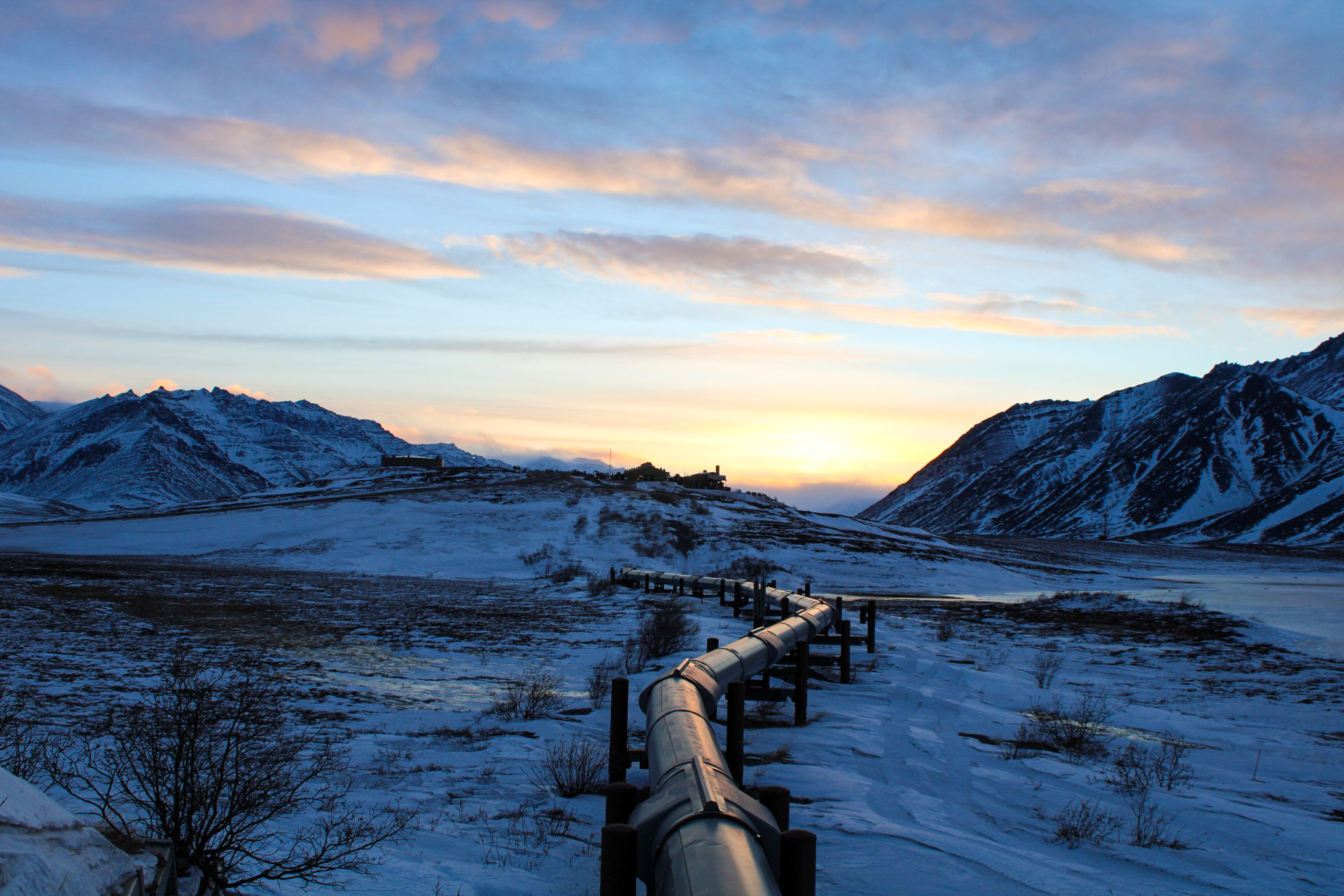
Oil is most optimally extracted at 80 degrees C. In tundra areas, this creates a significant heat imbalance and gradient between the thousands of kilometres of pipes that transport this oil and the vulnerable permafrost below.
Management strategies in the tundra
- snake drilling: from one site, lateral drilling underground can reach more areas. This reduces the need for there to be infrastructure and heat pipes between oil extraction sites, which can melt permafrost and remove vegetation
- building on pads and piles: gravel pads absorb large amounts of heat, effectively replacing and complementing the active layer, reducing the heat the permafrost is exposed to. Spine Road, Prudhoe: 2m tall gravel pad.
- Piles are like stilts: infrastructure can be built on them, meaning that they are not in contact with the ground, using the air as a buffer between warm buildings and the permafrost.
- refrigerated supports: directly cools the ground below the infrastructure and the Alyeska pipeline, stopping the absorption of heat by the earth through direct cooling and creating a gap between the infrastructure and the ground
- supercomputers and AI: remote sensing and computation with the cloud and AI reduce the need for infrastructure to be built in areas to explore: predictions can be made accurately from afar.
Changes over time
3.a. Human factors can disturb and enhance the natural processes and stores in the water and carbon cycles.
3.b. The pathways and processes which control the cycling of water and carbon vary over time.
Equilibrium and Feedback Loops
The global carbon and hydrological cycles are typically in a state of dynamic equilibrium - a balance between all stores and flows in a system. This means that if there is an imbalance of one aspect of the system, such as the inputs, then processes and outputs will adjust to ensure that the system remains stable. In the long-term, this may be true. In the short term, the inputs, outputs and flows may sway from net gain to net loss, or vice versa, in disequilibrium. Negative feedback loops are examples of the system self-regulating. Positive feedback loops are the opposite.
Positive feedback loops
Positive feedback loops are a snowball effect. That is, the system, after a trigger occurs or threshold is reached, the system increasingly becomes out of balance.
In the water cycle:
- A greater greenhouse effect increases global temperatures. This means the atmosphere can hold more moisture. The higher temperatures increase evaporation rates. This increases the greenhouse effect. This means that temperatures are higher, and evaporation increases.
- Temperature increases in the atmosphere. This increases sea surface temperatures. This melts polar sea ice. This decreases the albedo effect from snow & ice cover. This increases sea surface temperatures…
In the carbon cycle:
- A greater greenhouse effect increases temps. Permafrost in the tundra is able to melt more quicky. CO2 and CH4 are released. This increases temperatures.
Negative feedback loops
In the water cycle:
- Higher temperatures from greenhouse effect. This increases evaporation. With more atmospheric water, more clouds are likely to form. This increases the albedo effect, reducing the amount of sunlight that is reflected as long-wave radiation. This lowers temperatures and evaporation.
- A rainfall event may occur. This increases the amount of infiltration and percolation into groundwater stores. The water table rises with more water. This increases overland flow, until the water level lowers. This lowers the amount of water in aquifers.
In the water cycle:
- Increased atmospheric CO2 emissions. This increases the amount of CO2 in the atmosphere. The CO2 available to plants increases, causing carbon fertilisation. Plants thus absorb more carbon from the atm. This lowers the atmospheric CO2 concentration.
Land use changes
A range of land use changes act as a catalyst for altering the flows and stores in the carbon and water cycles.
Urban growth
Urbanisation (change in land use from rural to urban). This:
-
replaces natural land with impermeable surfaces, such as tarmac;
-
reduce percolation and subsequent infiltration, increasing runoff;
-
encourage fast drainage of water after precipitation into sewage systems;
-
ultimately, decreasing the lag time and increasing peak flows.
-
decreases natural stores and sequestering of carbon, even releasing it from trees that may be burned;
-
requires additional surrounding land to sustain development, reducing diversity and carbon stores;
-
increases carbon emissions on a local scale from urban development and combustion.
Farming
Modern agricultural techniques require huge amounts of change to natural environments and huge amounts of water to sustain crop growth. In the Colorado River basin, USA, agriculture accounts for 80% of all water that is used.
- irrigation systems are typically located closest to rivers; reducing river flow and storage in aquifers
- irrigation increases water in the soil (pedosphere) temporarily, with an increase in evaporation and transpiration increasing relative humidity;
- aquifers may dry up, decreasing the local water table, lowering the number of springs, and flow in rivers.(could you link this to a negative feedback loop?);
- natural interception is reduced vs forest or grasslands;
- ploughing increases evaporation losses and decreases soil moisture;
- ditches and subsurface draining channel water rapidly away from being able to infiltrate and percolate, and into streams or gulleys, increasing peak flow;
- heavy machinery compacts areas of soil that inhibit infiltration on a local-scale
Forestry
Modifies the water cycle on a local scale, depending on the type of trees and area of effect.
Water Extraction
Water extraction includes surface extraction and also extraction of water from aquifers and artesian basins - thus the removal from these stores and transfer to others.
Artesian aquifers are those under artesian pressure. This means that in a syncline area - one confined by strata of impermeable rock geologies - water is able to travel to the surface, depending on the potentiometric surface. Imagine that the water table in an area of porous chalk is at the surface. However, the chalk in this basin - a U-shape with various layers of rock above and below - is at the base of this “U”. When drills are made into the bottom of this basin which may be above a population centre such as London, this water is able to rise to the surface, as a hole has been put into the impermeable rock.
In London, the water table fell by 90m due to industry. By 1990 it was recovering at 3m/yr. Underground infrastructure was threatened and Thames Water now has permits to abstract water, maintaining the equilibrium.
In the River Kennet, upstream from London, which drains 1,200 km2 of land, water extraction from sources has decreased river flow by 14% consistently. This is worse in droughts when up to 40% of the flow is lost. This reduces overland flow in the river, and also the flux as percolation into aquifers, whose water tables are less likely to rise to the surface, affecting a number of springs and saturated overland flow and water in surrounding areas. Water available for uptake by trees is also lost. Downstream, floodplains have seen a lowering in the water table and less time spent with the saturated ground.
How water and carbon are linked
4.a. The two cycles are linked and interdependent.
As I’ve hinted at and I’m sure you’ve realised by now, the water and carbon cycles are linked in many ways.
- Oceans
- Atmosphere
- Cryosphere
- Vegetation
Management strategies for carbon
At a local scale, an example of an all-round approach to management strategies can be seen with the UN’s REDD+ scheme - which offers incentives to companies and businesses to change the way forest resources are handled. “Carbon credits” can be purchased by TNCs from local tribespeople, who use the money for sustainable development with agroforestry and land stewardship, as opposed to more intensive agriculture, reducing emissions and deforestation. UNEP - REDD
Afforestation
Afforestation is the process of planting trees in areas where there are none, perhaps as a result of prior deforestation, or simply where trees do not traditionally grow. Trees need to have a permanence of 100 years to be an effective sink; they take up carbon in this period in the medium to long term. Over time, trees can absorb large quantities of C02 from the atmospheric store - around 1 tonne per tree.
The Chinese Great Green Wall and the one in Africa with the same name are examples of large-scale afforestation projects. An estimated 100 billion trees is being targeted to be planted by 2050 over a land area the size of Spain in the Gobi Desert, sequestering carbon (you can do the maths here) and also reducing desertification and land degradation - China’s biggest biological threat. The broader implications of afforestation may be a good idea to place in essay conclusions for 16-markers.
Of course, ensuring that the land does not become deforested in the first place, perhaps though legislation or policing against farmers and miners can be argued to be a more effective management strategy as this preserves the natural ecosystem. Or, legal but managed logging of areas that ensure that monocultures are avoided whilst preserving the biodiversity through the replanting of diverse trees may also be a better strategy.
Agricultural practices
Agricultural practices are also used in conjunction with afforestation, especially in areas previously subject to unsustainable practices or “slash and burn” techniques. Livestock farming, mostly cows, accounts for around 75% of deforestation in the Amazon, and emits over 100 million tonnes of methane, which is 28x more potent than just CO2, on top of the release of sequestered carbon in forest regions cleared for agriculture.
At a local scale, Degraded Land Afforestation in Uruguay uses “carbon financing” (carbon credits), which may come from REDD+, to plant trees on more degraded land, whilst cattle graze in the lower areas.
Indirect measures can also be taken: animal feed can be improved, such as by giving seaweed to cows reducing methane burp emissions by 82%. Manure can also be recycled or added to anaerobic containers can also be a way to generate energy in rural areas, reducing the reliance on fossil fuels.
Restoration of wetlands
Globally, wetlands account for around 7% of the land. But also 35% of the terrestrial carbon store - meaning that they are very effective carbon sinks. Compared to tropical rainforests, they can store up to 50x more carbon in the same area. Globally, peatlands store 2x more carbon than all forests.
The conditions of wetlands create low-oxygen soils, leading to anaerobic conditions. This inhibits the decomposition process and matter is thus unable to be broken down, accumulating as peat over time.
However, where these regions are widespread such as the tropics, human activity to sustain high population densities has reduced the amount of natural mangroves and salt marshes. Despite this reduction and associated risk to natural ecosystems, there have been schemes and actions taken to restore the prevalence of these wetlands. In Cambridgeshire, 500ha of low-lying land has been converted back to wetland as a result of the EU Habitats Directive. Controlled flooding of inland areas such as the Fens can also contribute to reclaiming land by the sea in these areas where the water table is naturally much higher.
In Canada, which is home to 25% of the world’s wetlands, 70% of the wetlands have been lost. However, pledges have been made to restore 30 percent of the degraded land by 2030 and over 1000 sq. km has been restored, sequestering almost 400,000 tonnes of C per year!
Carbon capture and storage
CCS is a technique used to stop carbon emissions from the source, such as in factories or power stations, or through directly capturing it from the air. Carbon dioxide may be captured and compressed, transported into a pipeline, and used in offshore oil extraction where otherwise it may be uneconomical to do so. Or, it could just be pumped into a syncline basin with impermeable rock where it remains hopefully for a long time.
International carbon agreements
The most effective way to protect the global carbon cycle may be international agreements. These provide a legal framework for large-scale, mass carbon emissions reductions globally, when done correctly.
1997 Kyoto Protocol
The Kyoto Protocol was the first major climate change protocol. Whilst it was legally binding, and 192 parties were included in it, many developing nations such as India and China - who “needed” to emit to continue their growth, were exempt from the protocol, and even some ACs such as the USA and Australia did not ratify the treaty. The overall goal of the protocol was to limit emissions to 5% of 1990 levels - and it worked. The protocol also had multiple rounds, the second of which capping emissions 18% below 1990 levels to 2020.
Kyoto introduced three major mechanisms to help reduce carbon (and the emission of other gases).
- Emissions trading: commoditises greenhouse gas emissions. Article 17 sets out the amount of greenhouse gas emissions that each country is permitted to emit, based on the overall target of the protocol (5% above 1997). Countries are allowed to buy and sell quotas of carbon - but due to supply and demand, prices of investing in sustainable development in the long term are cheaper. More details in the cap and trade section below.
- Clean development mechanism: This incentivises industrialised countries to invest in cleaner energy use in countries in the process of developing. This gives ACs flexibility on how quotas are reached - as the offset of carbon is counted as their emissions - whilst encouraging the use of these sustainable practices - such as the use of solar panels in rural communities - in developing nations. By 2012, this accounted for around 3 billion tonnes of CO2 reduction.
2015 Paris Climate Convention
The PCC in 2015 attempted to build on the successes of the Kyoto Protocol whilst also modernising it. It aims to limit CO2 emissions and temperature increase below 2 degrees C.
- Countries publish their naturally determined contributions and there is pressure at the global scale to consistently outperform other countries;
- Long-term strategies
Management strategies for water
There are global strategies that have the potential to protect the water cycle, including:
- forestry
- water allocations
- drainage basin planning
Forestry techniques
The protection of forests ensures that areas on a local scale are protected from deforestation in law. The UN, World Bank and governments all collaborate to ensure forests do not become degraded. The REDD+ programme funds projects in over 50 countries with direct investment, technology and carbon offsets.
NGOs such as WWF and the ARPA program in Brazil ensure that over 128 million acres of land, targeting 150 million, are protected.
Water allocations
In areas of water scarcity, water may be allocated by governments and rationed between different groups and stakeholders, such as businesses, farmers and individuals.
Agriculture, as seen in the Colorado River basin in the USA, accounts for over 80% of the water use. Globally agriculture accounts for over 90% of consumption, including municipal and industry sectors.
Management strategies:
- minimising water loss through evaporation with the use of drip irrigation, reducing usage by 70%.
- terracing and vegetative strips encourage the pooling of water on the surface. This reduces runoff and allows more time for water to infiltrate, moving through the soil as throughflow.
- capping usage for certain states (in the Colorado basin) to ensure that droughts do not disproportionally damage downstream states and environments.
Drainage basin planning
This is a collaborative effort at the drainage basin scale to encourage the sharing of demands and needs for everyone involved, including domestic use, industry and agriculture.
Calculations are made in relation to the amount and rates of fluxes in the system, with “targets” placed on stores. For example, stating that aquifers should always remain 50% at capacity with a high water table. After these plans have been made, actions can be taken, such as reforestation to improve interception rates, slowing peak flow, and encouraging greater infiltration and percolation. Urban areas can be financially incentivised to reduce the amount of impermeable surfaces - such as in the EU Water Directive Framework pre-2020 where 10 catchment hydrologies had holistic plans established to improve the amount and availability of water at this scale.
You’ve made it to the end of the content!
Good luck with your exams!
Feel free to share this Cheat Sheet with friends, family and teachers.
If you found this useful, please do send a message on Discord to let me know! This document has over 18,000 words hand-written by me, all available for free, so messages are appreciated :)
Made with 💕 by Draggie
Paper 1 - Additional Skills
The OCR specification also lists some specific skills you must have to ensure you get full marks. These topic-specific skills are:
- climate graphs
- simple mass balance (remember from glaciation?)
- rates of flow
- unit conversions
- analysis and presentation of field data
Statistical tests
Median
Rank the data and work out the middle value. If it’s between two points, then take the mean value between them.
- easy to calculate
- not affected by extreme, anomalous values
- most of the values are ignored
- less “sensitive” than the mean (a significant change on one side can be balanced by a small number on the other)
Mean
Add all values in the series together and divide by the total number of values. This is the “average”.
- all values accounted for
- gives fair representation for all values
- affected by all values even if anomalous/very large or small.
Mode
The value that occurs in data the most.
- can be used on qualitative data
- useful for spotting patterns
- may be multiple modes, or none at all
- only useful for specific enquires
Range
Subtract the lowest from the highest value in the data.
- shows the full spectrum of all data
- can be significantly affected by extreme values
- most data is ignored
Interquartile range
Rank the data, then identify the median. For all values below the overall median, calculate the median. Repeat for the upper half. Then, subtract the lower half median from the upper half median.
- measures dispersion of data
- not easily affected by outliers
- doesn’t include all values
Spearman’s Rank
Tests the significance of a correlation between two variables.
Compare the number of items (degrees of freedom) given to the significance table. The hypothesis can be rejected if the number in the table is below the critical value at 0.95, then your hypothesis can be rejected. If it’s above, then there is less than a 5% that the relationship was caused by chance, and you accept the hypothesis. You can go even further if given a critical value of 0.99, which means there is a less than 1% chance of this being caused by chance!
If you have a t-value, then subtract 2 from the degrees of freedom. Else, leave it as the number of samples.
Confidence intervals can be obtained from the following formula:
(no need to know this - unless you do maths?)
THE END